Roblox: What Parents and Schools Need to Know
Roblox now has over 70 million daily active users worldwide, the majority of them children aged 6 to 14. Yet according to a Common Sense Media survey (2024), only 23% of parents of children playing Roblox know what the platform actually is beyond its name. This guide bridges that gap.
What Roblox actually is
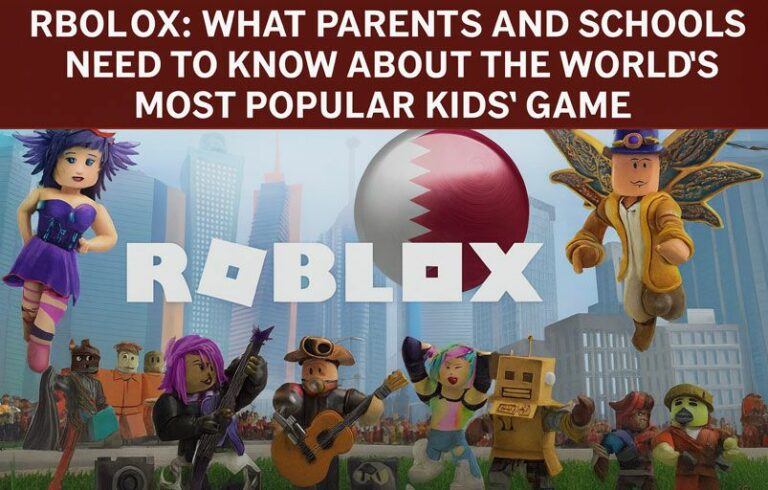
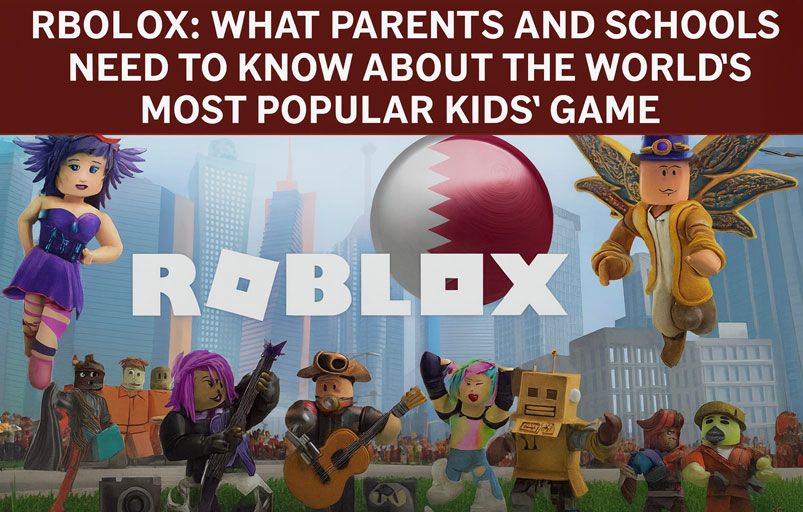
Roblox is not a game — it is a platform hosting thousands of user-created games. Think of it as a digital city of amusement parks, some well-secured, others not at all. Children can play, create their own games, and communicate with anyone in real time through the built-in chat. The virtual currency (Robux) can be purchased with real money and spent inside the platform — a frequent source of unexpected family expenses.
What concerns experts
The NSPCC (UK) has ranked Roblox among the platforms where reported grooming cases increased most between 2021 and 2024. Several structural factors explain this:
- Unfiltered live chat: messages between players are moderated after the fact, not in real time
- Disguised “games”: some Roblox spaces simulate adult behaviours under cover of gameplay
- The Robux lure: predators offer Robux to establish contact and create emotional debt
- No verifiable age: an adult can claim to be 10 years old and play alongside your child
A practical guide for parents and teachers
For parents
- Create a Roblox account yourself — You cannot protect what you don’t understand. Spend 15 minutes on the platform before letting your child play.
- Enable the restricted child account — In privacy settings, activate “Restricted Account” for under-13s. This automatically limits communications and accessible games.
- Disable chat — For children under 9, disable chat entirely through Roblox parental settings.
- Set a monthly Robux budget — Fix an amount and discuss with your child how they spend it.
- Play together regularly — Not to monitor, but to understand. Ask your child to show you their favourite games and who they play with.
For teachers
- Incorporate Roblox into classroom digital citizenship discussions — almost every student knows the platform
- Use concrete platform examples to illustrate privacy, grooming, and data management concepts
- Invite students to share gaming experiences — their accounts often reveal normalised concerning behaviours
Does Roblox bear responsibility?
Since 2022, Roblox has introduced several improvements: age verification, automatic chat content detection, and simplified reporting tools. These advances are real but insufficient to replace parental vigilance. The best protection remains a combination of technical tools, family conversation, and structured digital education — like the programmes offered by Cyber Sqool.