ChatGPT Safety for Teens: What’s New in 2026?
ChatGPT is now used by millions of teenagers worldwide for homework, research, and increasingly to talk about personal problems. This shift is fast, massive and largely unregulated. Here is what every parent needs to know in 2026.
AI adoption by teens: surprising numbers
According to Common Sense Media (2025), 58% of American teenagers aged 13-17 regularly use generative AI tools. In France, ARCOM estimates that 44% of 15-17 year olds have used ChatGPT for school since 2023. In Morocco, a Mohammed V University study (2024) found that 62% of high school students use AI for homework without telling their teachers. These figures signal a profound cultural transformation that must be accompanied, not ignored.
4 real risks for teenagers
1. Cognitive dependency
When a teenager systematically delegates their thinking to AI, they develop less ability to reason independently. Research from the University of Reading (2024) suggests students who use AI to write their work retain 40% fewer concepts than those who write it themselves.
2. Hallucinations and misinformation
ChatGPT can present false information with complete confidence — a phenomenon called “hallucination.” For a teenager researching medical or scientific topics, this risk is real. In 2024, several French students were flagged for citing entirely ChatGPT-invented sources in their presentations.
3. Emotional exposure
Many teenagers confide personal problems to ChatGPT — depression, relationships, family conflicts. The tool does not judge, but it cannot refer anyone to professional help. Its responses can even reinforce negative thoughts if the model is not properly configured.
4. Data privacy
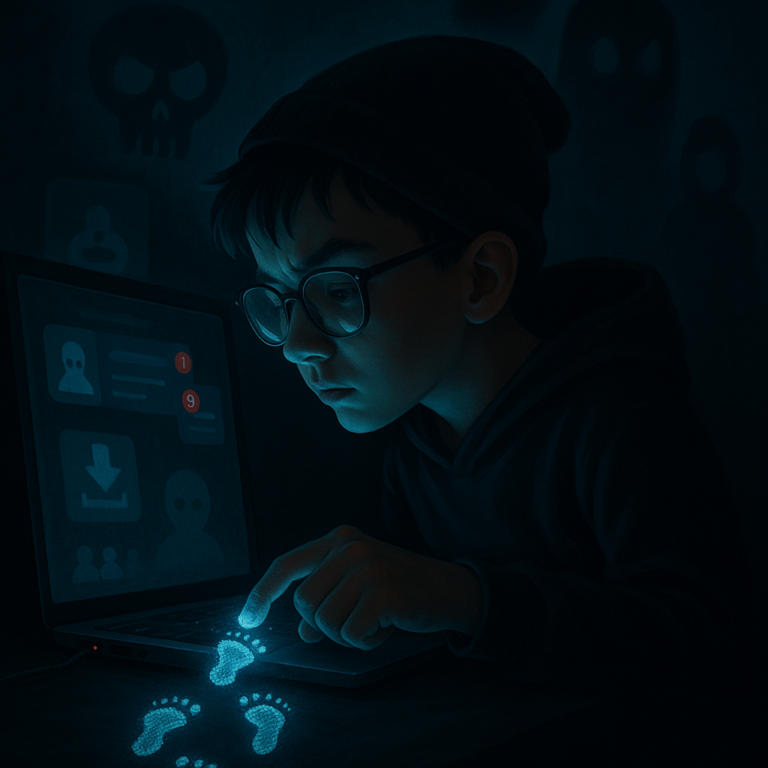
Everything a teenager types into ChatGPT may be used to train the model depending on user settings. Personal, school-related, or medical information shared without awareness of this risk creates serious confidentiality issues.
How to guide AI use without banning it
Banning ChatGPT for a teenager in 2026 is as unrealistic as banning Google in 2010. The answer is not prohibition — it is digital literacy:
- Distinguish help from cheating — “ChatGPT can help you organise your plan, but the content must come from you.”
- Always verify sources — ChatGPT is not Wikipedia. Any critical information must be checked against a primary source.
- Never share personal information — Full name, address, school: never in an AI chat.
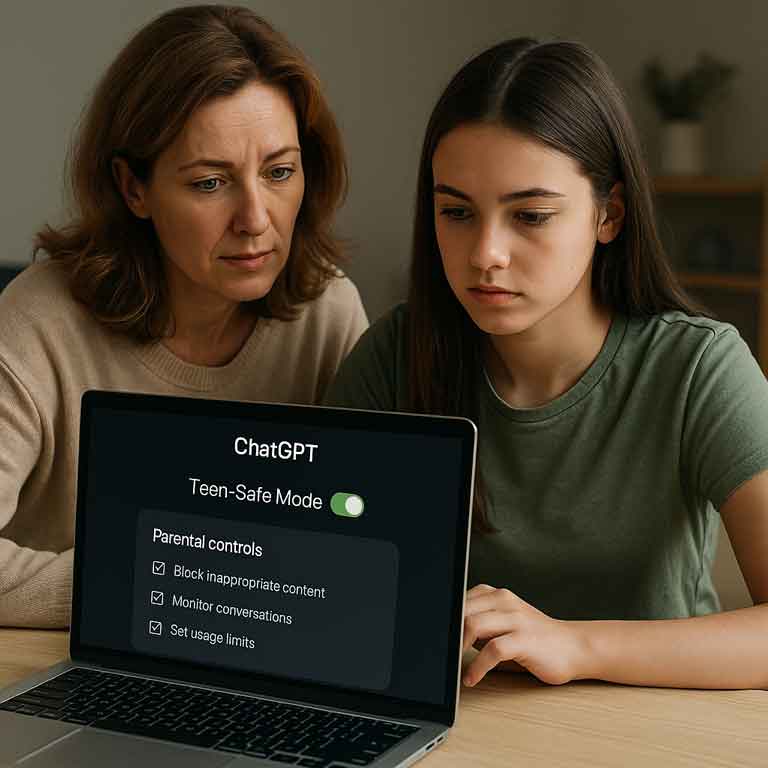
- Enable safety settings for minors — OpenAI offers enhanced safety parameters worth exploring together.
- Talk about it regularly — Without judgement, with curiosity. Ask your child how they use AI. Open conversations are the best protection.
The real skill to teach teenagers in 2026 is not how to avoid AI — it is how to use it with critical thinking and responsibility. Cyber Sqool includes age-appropriate modules on healthy AI use, preparing children for this reality from primary school onwards.